 CASA PAI ROGERIOCarapicuíba/SP
Xangô: meaning, history and traditions in Umbanda and Candomblé
Orixá of thunder, fire and justice, identified in Yoruba traditions with a king of Oió.
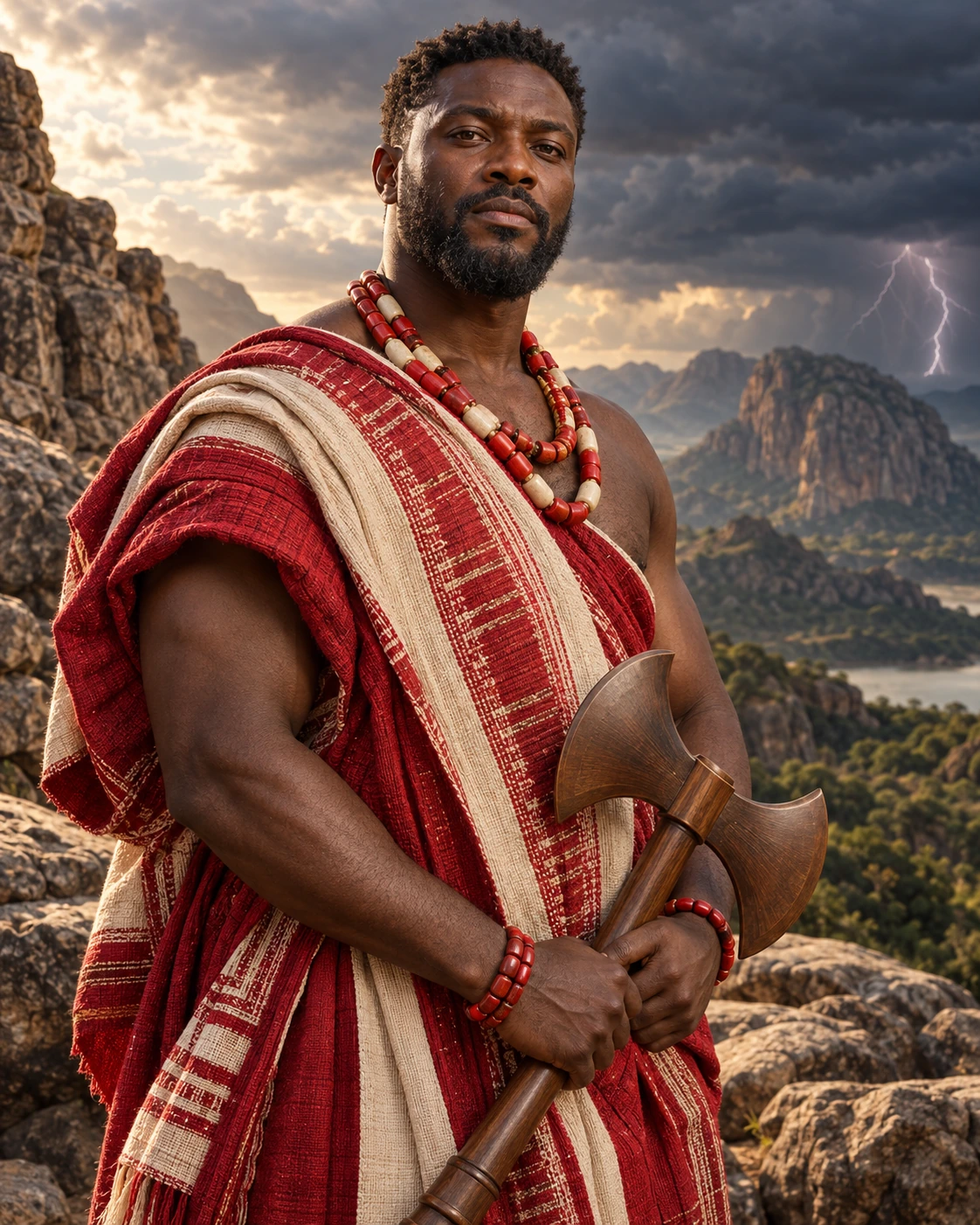
Who Xangô is
Belief / interpretationXangô is the Orixá of justice. His element is fire and his manifestation, thunder. He is seen as rigorous: he punishes liars, thieves and wrongdoers.
Documented historyPierre Verger observed that Xangô, like other Orixás, has a historical and a divine aspect. Yoruba traditions present him as the fourth alafim (king) of Oió, a powerful city. This historical dimension coexists with the veneration of the Orixá.
Belief / interpretationThat is why his symbol is the oxê, the double-bladed axe, and royalty is part of his image. Among his wives, traditions name Oiá (Iansã), Oxum and Obá.
Xangô in Umbanda
Teaching of a house or traditionIn many houses, the Orixás are seen as rulers of lines of spiritual work. When one speaks of Xangô's line, each house defines what that means. The site describes the idea without fixing it as a rule.
One interpretation in Umbanda Sagrada
Teaching of a house or traditionAn Umbanda Sagrada organization presents this Orixá, associating it with justice and balance. This is one tradition's interpretation, not a confirmed foundation of CASA PAI ROGERIO. It should not replace Yoruba narratives or be treated as a universal correspondence.
Belief / interpretationThe source page also presents colors, stones and herbs of its tradition. We do not reproduce them as a table of recipes. A plant's common name, religious association and safety of use are different questions; a correspondence does not authorize ingestion or healthcare treatment.
Traditional narrativeXangô's justice
One narrative recounts that Xangô won a war and, at the height of fury, hurled a lightning bolt that eliminated the enemy chiefs responsible for the massacre of his soldiers. But the surviving enemy soldiers were spared, and from then on his sense of justice came to be sung and admired.
Narrative retold in summary, in the site's own words. Variations exist among houses and traditions; the bibliographic attribution, when available, appears at the end of the page.
Frequently asked questions
Is Xangô only violent?
No. The sources describe him as imposing and rigorous, but also as a just ruler. Lightning symbolizes the power to do justice.
Are there several Xangôs?
Yes. Candomblé leaders describe qualities such as Agodô (the elder) and Aganju (king, sovereign).
Bibliographic references
- VERGER, Pierre Fatumbi. Orixás. Salvador: Corrupio, 1997 (work cited in the sources consulted; consult the edition of your choice).
- PRANDI, Reginaldo. Mitologia dos orixás. São Paulo: Companhia das Letras, 2001.