 CASA PAI ROGERIOCarapicuíba/SP
Oxalá: meaning, history and traditions in Umbanda and Candomblé
Orixá associated with the creation of humanity and peace, revered as the father of many Orixás.
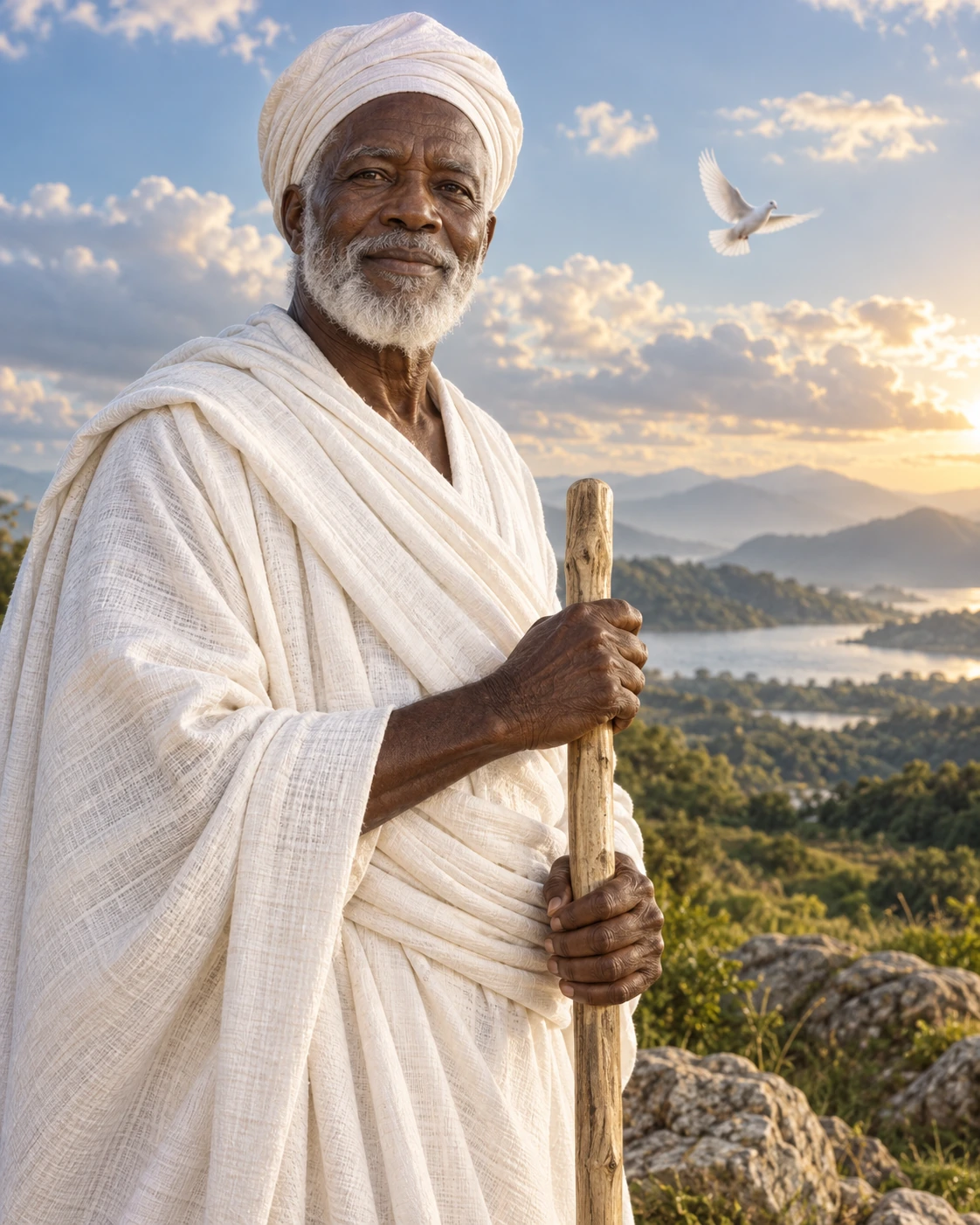
Who Oxalá is
Belief / interpretationOxalá is one of the most respected Orixás in every tradition that worships him. He is called "king of the white cloth" and seen as a symbol of calm, serenity and peace. His very name is interpreted as "white light".
Belief / interpretationTraditions describe two main forms: Oxaguiã, the young, warrior Oxalá, and Oxalufã, the old Oxalá, who walks with the metal staff called opaxorô. White is the color of both, with small differences among Candomblé nations.
Teaching of a house or traditionIn some houses, Friday is considered Oxalá's day, and some people adopt white clothing and avoid certain foods on that day. These customs belong to each house and its regional tradition; they are not everyone's rule.
Oxalá and syncretism
Documented historyIn the colonial context, persecution of African-rooted religions led to the identification of Orixás with Catholic saints and figures. In Oxalá's case, the most common association is with Jesus, and in Bahia with the Senhor do Bonfim. Today this identification is read in different ways: as a survival strategy, as cultural dialogue or as an expression of faith by those who live both traditions.
Oxalá in Umbanda
Teaching of a house or traditionIn Umbanda, Oxalá usually occupies the top of the organization of spiritual forces, and many houses see him as ruler of all lines. This view is not unanimous.
Two creation narratives, without forcing a single version
Traditional narrativeIn the public excerpt of Mitologia dos orixás, by Reginaldo Prandi, one narrative presents Orixanlá creating solid ground in a world of waters and swamps. Olorum hands him earth in a shell and two birds, which spread it. A chameleon checks whether the ground is firm; only then can the surface be inhabited. The account associates Ifé with the formation of that dwelling place.
Traditional narrativeAnother narrative in the same excerpt follows Obatalá and Odudua. Obatalá receives the mission of creation but does not follow Orunmilá's guidance and fails to recognize Exu along the way. Thirst leads him to palm wine, and he falls asleep. Odudua receives the continuation of the task and spreads the earth over the waters. When Obatalá awakens, the earth is already made, but the creation of living beings and humanity is still entrusted to him.
Belief / interpretationThe stories have different characters and sequences. There is no need to merge them into a single episode to respect them. They are traditional narratives recorded in a collection, not a science manual or a recipe for repeating offerings. Lessons about creation, responsibility and recognition of the forces are religious interpretations that may vary.
One interpretation in Umbanda Sagrada
Teaching of a house or traditionAn Umbanda Sagrada organization presents this Orixá, associating it with faith and harmonization. This is one tradition's interpretation, not a confirmed foundation of CASA PAI ROGERIO. It should not replace Yoruba narratives or be treated as a universal correspondence.
Belief / interpretationThe source page also presents colors, stones and herbs of its tradition. We do not reproduce them as a table of recipes. A plant's common name, religious association and safety of use are different questions; a correspondence does not authorize ingestion or healthcare treatment.
Traditional narrativeOxalá and the creation of humans
In traditional narratives, Olodumarê gives Oxalá the task of creating the world. After the episode with Exu and the diversion of the task to Odudua, Oxalá receives the mission of shaping humanity. Tradition recounts that the needed clay came from Nanã, and that the first successfully shaped being was made of clay. Details differ from house to house.
Narrative retold in summary, in the site's own words. Variations exist among houses and traditions; the bibliographic attribution, when available, appears at the end of the page.
Frequently asked questions
Is Oxalá Jesus?
In many houses the association exists, inherited from syncretism, but it is not a universal doctrinal identity. Some traditions, especially those seeking distance from Catholicism, do not adopt it.
Is there only one Oxalá?
No: traditions speak of qualities, mainly the young one (Oxaguiã) and the old one (Oxalufã).
Bibliographic references
- PRANDI, Reginaldo. Mitologia dos orixás. São Paulo: Companhia das Letras, 2001.
- VERGER, Pierre Fatumbi. Orixás. Salvador: Corrupio, 1997 (work cited in the sources consulted; consult the edition of your choice).