 CASA PAI ROGERIOCarapicuíba/SP
Ogum: meaning, history and traditions in Umbanda and Candomblé
Orixá of iron, technology, agriculture and paths, very present in Brazil.
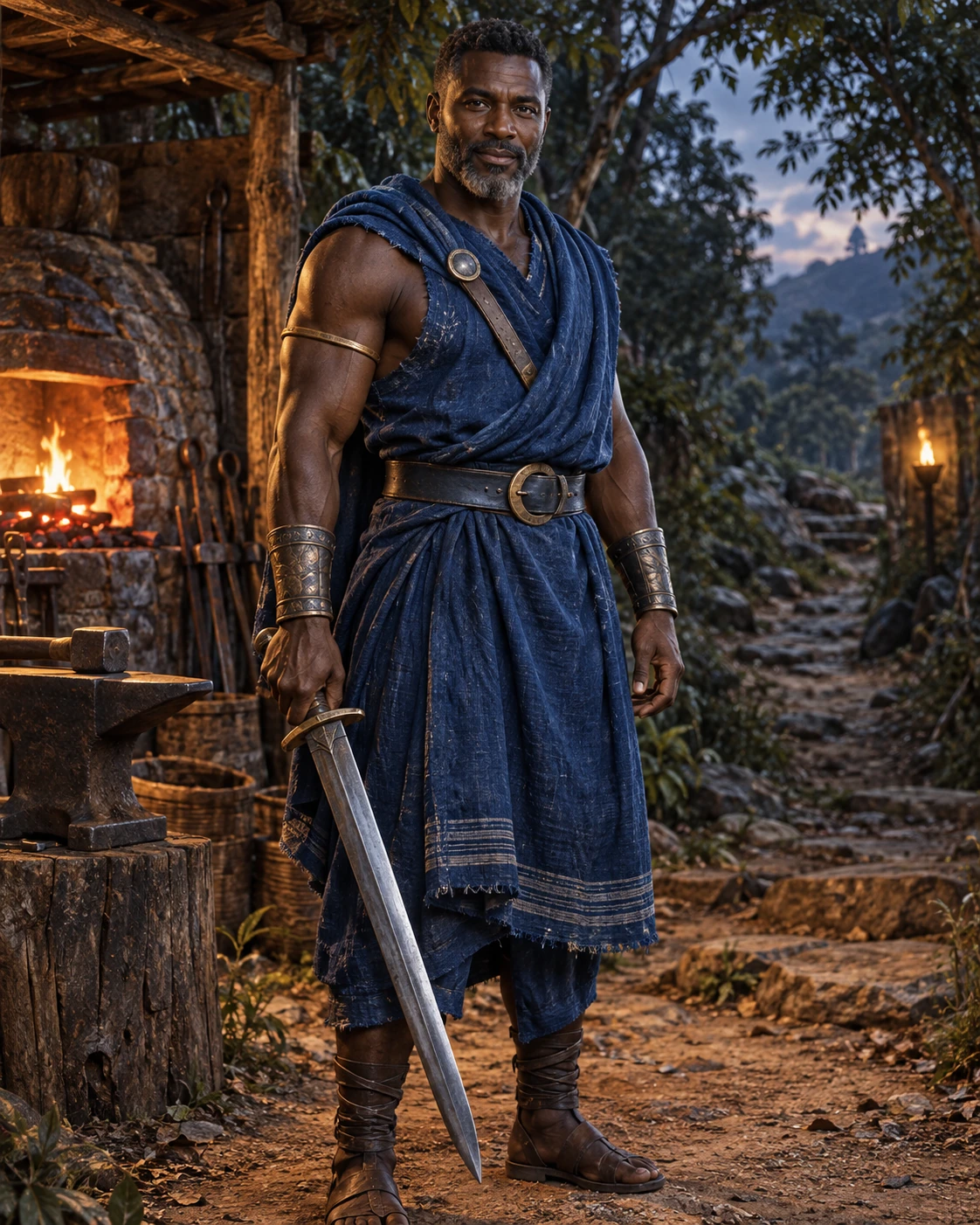
Who Ogum is
Belief / interpretationOgum is the Orixá of iron and, by extension, of all work that uses metal: the blacksmith, the farmer, the soldier, the computer technician. He is called a civilizing Orixá, for being connected with the activities that allowed the technical development of peoples.
Belief / interpretationHe is also associated with the opening of paths and with protection, which is why he is invoked by those starting a journey. In Brazil, the best-known greeting is "Ogunhê!", interpreted as "Ogum lives".
Teaching of a house or traditionSome houses use "Patakori" as an exaltation of Ogum, understood as the one who directs the head of his children. This usage depends on the tradition.
Ogum and São Jorge
Documented historyIn the Southeast, the identification with São Jorge is one of the most expressive forms of Brazilian syncretism. The literature observes that the influence runs both ways: elements of Ogum's worship also shaped the popular image of São Jorge, as a warrior saint celebrated in popular fashion, while the traditional Catholic image was that of a chaste and devout knight.
Teaching of a house or traditionIn some houses red and white are Ogum's colors, through São Jorge's influence; in others, blue prevails. The choice depends on the house's style.
Ogum in Irê: silence and repentance
Traditional narrativeA traditional version recounts that Ogum, after a long period of wars, returned to the city of Irê, where he had left his son in command. He did not know the inhabitants were taking part in a ceremony that required silence. Receiving no answer or greeting, he read the situation as contempt.
Traditional narrativeHungry and thirsty, he found empty vessels and grew furious. The narrative describes terrible violence against the people of his own city. When his son arrived and explained the rite, Ogum realized what he had done. The welcome and the tributes did not erase his regret.
Traditional narrativeIn the ending of this version, he drives his sword into the ground, the earth opens and Ogum passes to Orum. The account presents his transformation into an Orixá. Other narratives already place him as a deity before these events; this is not a single chronology, nor a proven biography.
Belief / interpretationThe episode can be read as a reflection on the difference between strength and haste, but this editorial reading is not a message attributed to Ogum. Here we do not reproduce words of invocation, we do not teach ritual and we do not justify violence through the account.
One interpretation in Umbanda Sagrada
Teaching of a house or traditionAn Umbanda Sagrada organization presents this Orixá, associating it with law and direction. This is one tradition's interpretation, not a confirmed foundation of CASA PAI ROGERIO. It should not replace Yoruba narratives or be treated as a universal correspondence.
Belief / interpretationThe source page also presents colors, stones and herbs of its tradition. We do not reproduce them as a table of recipes. A plant's common name, religious association and safety of use are different questions; a correspondence does not authorize ingestion or healthcare treatment.
Traditional narrativeOgum and agriculture
One narrative recounts that Ogum cultivated the land and made corn and yams grow, taught planting, harvesting, hunting and iron forging, becoming the patron of agriculture. It is a story that gives technique a sacred place.
Narrative retold in summary, in the site's own words. Variations exist among houses and traditions; the bibliographic attribution, when available, appears at the end of the page.
Frequently asked questions
Is Ogum only a warrior?
No. He is also a farmer, a blacksmith and an opener of paths. The idea of war appears together with protection and work.
Are Ogum and São Jorge the same figure?
There is a strong association in Rio de Janeiro and the Southeast, but it is a cultural and religious identification that changes by region and house.
Bibliographic references
- PRANDI, Reginaldo. Mitologia dos orixás. São Paulo: Companhia das Letras, 2001.
- VERGER, Pierre Fatumbi. Orixás. Salvador: Corrupio, 1997 (work cited in the sources consulted; consult the edition of your choice).