 CASA PAI ROGERIOCarapicuíba/SP
Iansã: meaning, history and traditions in Umbanda and Candomblé
Orixá of winds, storms and lightning, associated with the passage of the dead to Òrun.
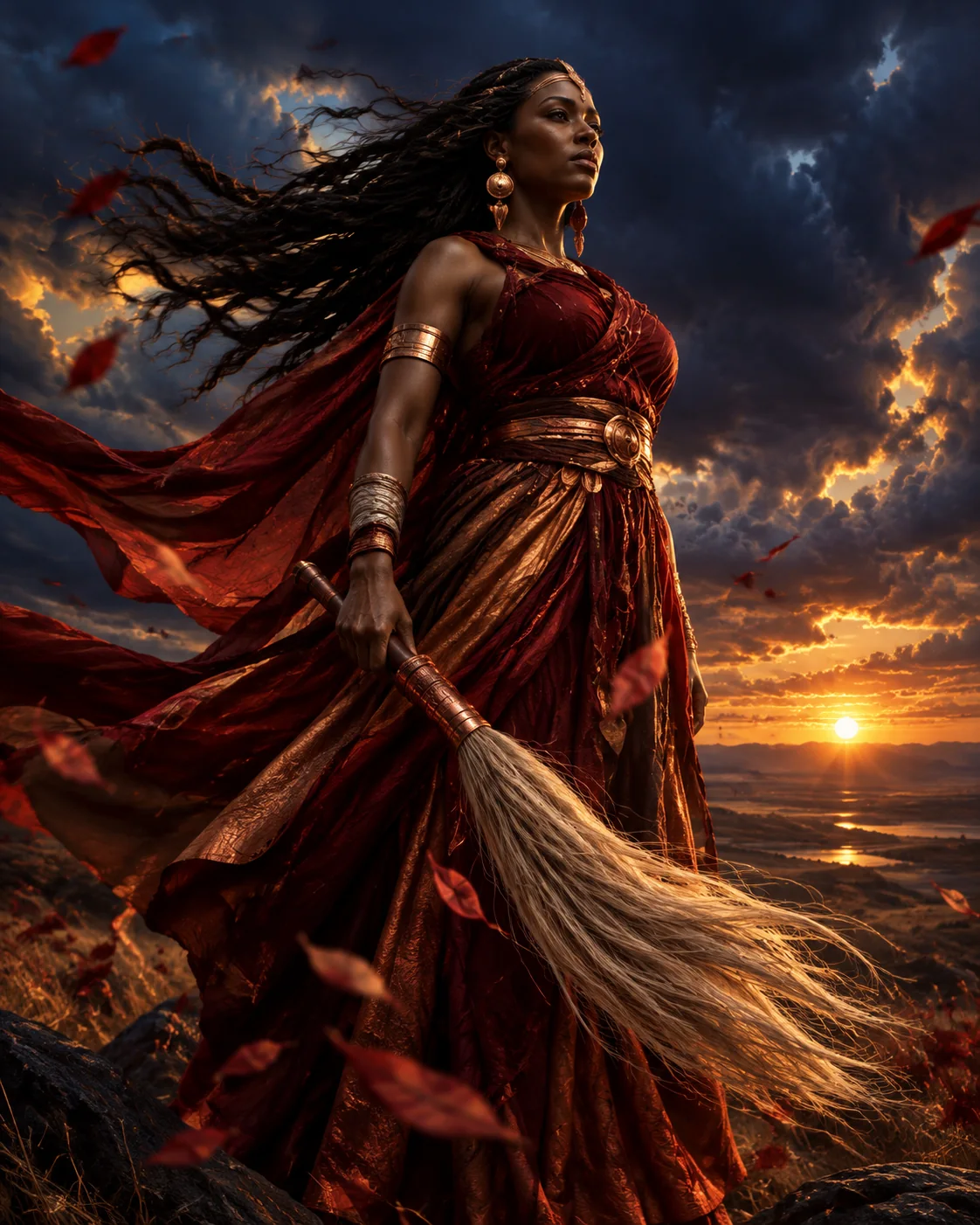
Who Iansã is
Belief / interpretationOiá, called Iansã in Brazil, is one of the most important female deities of Yoruba religion. Her domain includes the wind that precedes the storm, fire and movement. In some narratives, she is the wind that announces Xangô.
Documented historyHer most common name in Brazil derives from an expression meaning something like "mother of the nine heavens", and is connected with the tradition that she had nine children. Her veneration originates in the Niger River region.
Belief / interpretationIansã is associated with the power to guide the spirits of the dead. The eruexim is the instrument with which she drives them away or guides them.
Different paths
Teaching of a house or traditionThere are lists of Oiá's "paths" or qualities, with different names. The list varies by house and source, and this site does not adopt one as official.
Oiá and her buffalo skin
Traditional narrativeIn the narrative published by Glaucia Carvalho, Ogum finds a buffalo in the forest and sees the animal shed its skin and reveal Oiá. While she goes to the market, he hides the skin. When she discovers she cannot recover it, Oiá is pressured to accept a marriage and demands that her secret not be revealed.
Traditional narrativeShe lives in the house, has nine children and keeps searching for the skin. The other wives eventually learn the secret and use it to offend her. Oiá finds her buffalo clothing, resumes her animal form and reacts with fury. The ending preserves the children and her return to the forest.
Traditional narrativeBefore leaving, she leaves horns so the children can call her in case of danger. This version connects the horns with Oiá's maternal protection. We do not turn the symbol into an assentamento rule for all houses.
Belief / interpretationThe account involves coercion, broken trust and violence. It is not a behavioral recommendation: stealing to impose marriage does not become acceptable because it appears in a sacred narrative. Oiá should be reduced neither to a dominated woman nor to the stereotype of female anger.
One interpretation in Umbanda Sagrada
Teaching of a house or traditionAn Umbanda Sagrada organization presents this Orixá, associating it with movement and direction. This is one tradition's interpretation, not a confirmed foundation of CASA PAI ROGERIO. It should not replace Yoruba narratives or be treated as a universal correspondence.
Belief / interpretationThe source page also presents colors, stones and herbs of its tradition. We do not reproduce them as a table of recipes. A plant's common name, religious association and safety of use are different questions; a correspondence does not authorize ingestion or healthcare treatment.
Traditional narrativeIansã and the axexê
One narrative recounts that, when death took Oiá's father, she gathered her instruments, prepared the foods he liked, and danced and sang for seven days. The hunters of the land gathered and, on the seventh night, she placed her father's belongings at the foot of a sacred tree. Moved, Olodumarê gave her the power to guide the dead to Òrun. Thus the axexê funerary rite is said to have been born.
Narrative retold in summary, in the site's own words. Variations exist among houses and traditions; the bibliographic attribution, when available, appears at the end of the page.
Frequently asked questions
Is Iansã Santa Bárbara?
In syncretism, yes, in much of Brazil. Other traditions do not adopt this association.
Bibliographic references
- PRANDI, Reginaldo. Mitologia dos orixás. São Paulo: Companhia das Letras, 2001.
- VERGER, Pierre Fatumbi. Orixás. Salvador: Corrupio, 1997 (work cited in the sources consulted; consult the edition of your choice).