 CASA PAI ROGERIOCarapicuíba/SP
Omulu and Obaluaiê: who he is, traditions and references
Orixá associated with illness and healing, also called "lord of the earth", son of Nanã and raised by Iemanjá in several traditions.
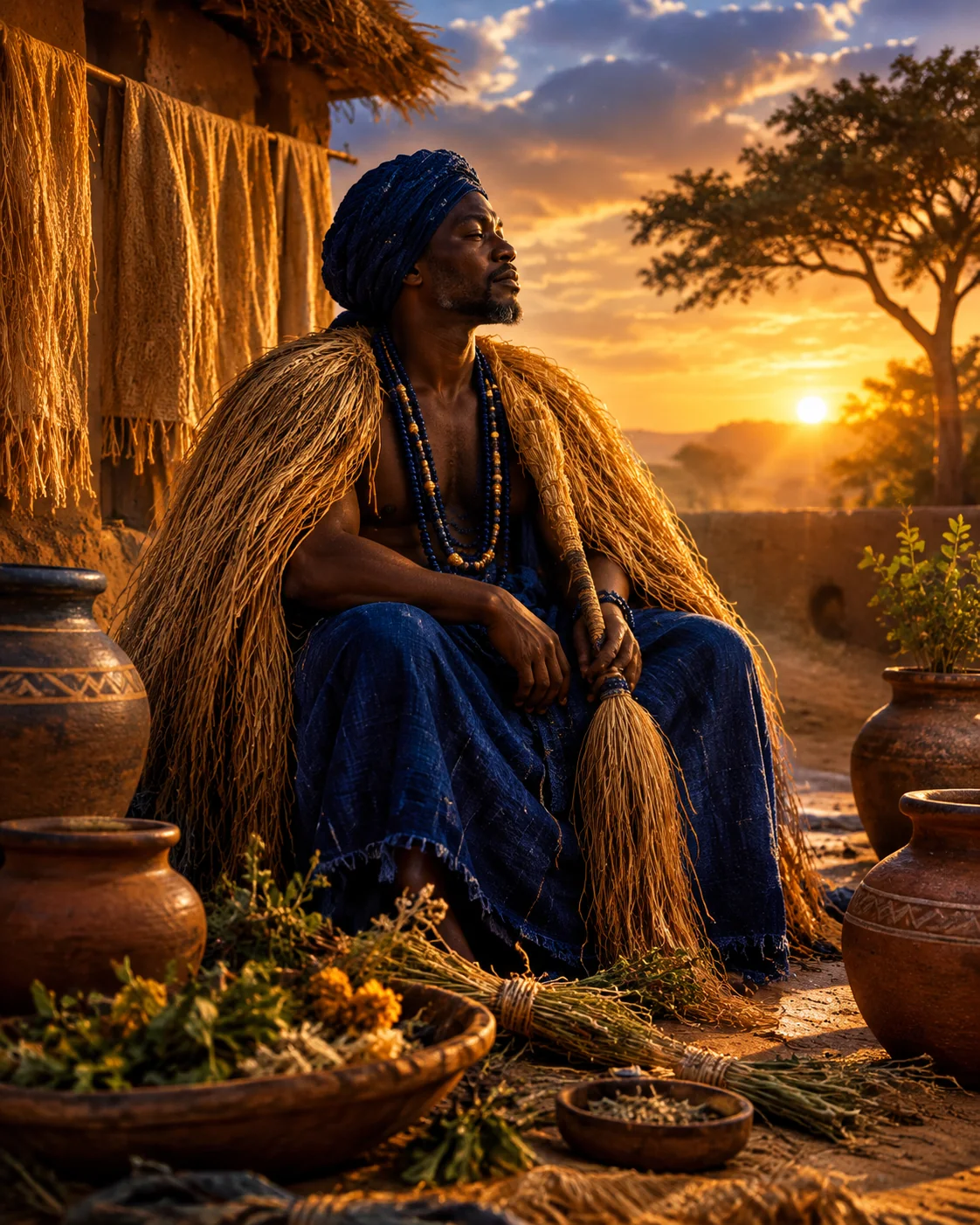
Who Omulu and Obaluaiê are
Belief / interpretationOmulu ("son of the lord"), Obaluaiê ("king, owner of the earth") and Xapanã are names of the Orixá associated with illness and healing. In many Umbanda houses, Omulu and Obaluaiê are treated as the same Orixá; other traditions distinguish between them.
Belief / interpretationHe is covered with straw, and the straw represents care for what is sacred. Many people fear him because they associate him with illness, but in the sources consulted he is, above all, the Orixá who heals and helps cross the boundaries between life and death.
Teaching of a house or traditionIn Umbanda, some teachings connect him with the process of reincarnation and human evolution, marking passages between spiritual states. This is an Umbanda tradition's interpretation, not found in Candomblé in the same way.
The xaxará and the leaves
Documented historyThe xaxará, a scepter of palm leaf ribs decorated with búzios and beads, is one of the objects associated with him. In African and Afro-Brazilian traditions, it symbolizes the act of "sweeping away" illness and impurities. The connection with knowledge of leaves is strong: sets of specific leaves are cited in sources about the Orixá.
One interpretation in Umbanda Sagrada
Teaching of a house or traditionAn Umbanda Sagrada organization presents this Orixá, associating it with evolution and care. This is one tradition's interpretation, not a confirmed foundation of CASA PAI ROGERIO. It should not replace Yoruba narratives or be treated as a universal correspondence.
Belief / interpretationThe source page also presents colors, stones and herbs of its tradition. We do not reproduce them as a table of recipes. A plant's common name, religious association and safety of use are different questions; a correspondence does not authorize ingestion or healthcare treatment.
Welcome in Iemanjá's waters
Traditional narrativeA traditional version presents Obaluaê as the son of Nanã and Oxalá, abandoned by the sea as a child. Iemanjá finds him wounded and decides to welcome him. The account describes care and protection until his recovery.
Traditional narrativeThe child remains marked, and the straw becomes part of his presentation. The story connects vulnerability, welcome and the religious knowledge of care. Other versions explain his relationship with Nanã, Iemanjá and the straw in different ways.
Belief / interpretationWe do not repeat language that treats a person with marks or illness as less dignified. Nor do we present illness as punishment for a parent's conduct. Care materials cited in the myth are not recommended treatment; no rite replaces healthcare.
Traditional narrativeThe sick king and the rain
One narrative recounts that, in ancient Daomé, a cruel king was dying of plague. Everyone knew that the plague and Xapanã were the same thing. Brought to the palace, Xapanã stood before the king, who begged his forgiveness for his atrocities. Xapanã made offerings, and the rain opened a hole at the king's feet, which swallowed his evil deeds. The king was healed, and the Orixá was called Obaluaiê, lord of the Earth.
Narrative retold in summary, in the site's own words. Variations exist among houses and traditions; the bibliographic attribution, when available, appears at the end of the page.
Frequently asked questions
Are Omulu and Obaluaiê the same Orixá?
In many Umbanda houses, yes; other traditions distinguish them. The site records the difference.
Why is he covered in straw?
In many houses, the straw shields the Orixá from view and symbolizes respect. The exact meaning varies by tradition.
Bibliographic references
- PRANDI, Reginaldo. Mitologia dos orixás. São Paulo: Companhia das Letras, 2001.
- VERGER, Pierre Fatumbi. Orixás. Salvador: Corrupio, 1997 (work cited in the sources consulted; consult the edition of your choice).