 CASA PAI ROGERIOCarapicuíba/SP
Ibejis: meaning, history and traditions in Umbanda and Candomblé
Divine twins, Orixás of joy, innocence and children, known for their cleverness.
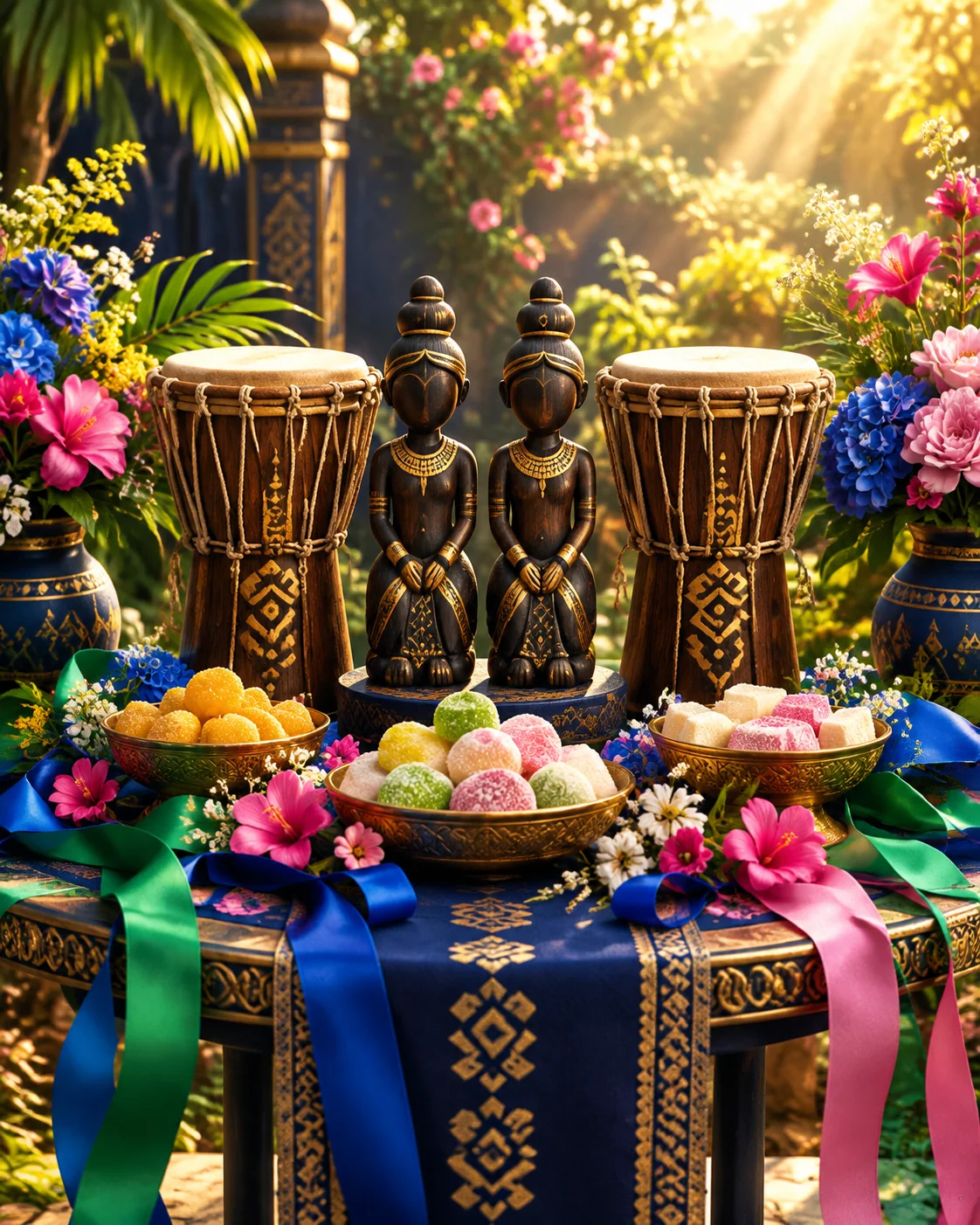
Who the Ibejis are
Belief / interpretationThe Ibejis are two twin brothers represented as children. They are connected with joy, innocence and children. They are known for their cleverness, and narratives say they were among the few to defeat Exu in a challenge.
Teaching of a house or traditionDo not confuse the Ibejis, who are Orixás, with the children of Umbanda ("erês"), spirits of a line of spiritual work. This difference appears in distinct ways depending on the house, and is addressed on the Children page.
Traditional narrativeThe twins' challenge to Exu
Exu, after defeating all the warriors of a village, was challenged by the twins to a drum duel: one would play and Exu would dance; whoever tired first would lose. One brother stayed on the road while the other hid in the forest. When one tired, he switched places with the other without Exu noticing. Exu finally tired and gave up.
Narrative retold in summary, in the site's own words. Variations exist among houses and traditions; the bibliographic attribution, when available, appears at the end of the page.
Frequently asked questions
Are Ibejis and Cosme e Damião the same thing?
There is a very popular syncretic identification in Brazil, especially at the September 27 festivities, but traditions understand it in different ways.
Bibliographic references
- Sobre Erês: genealogia das tradições, na umbanda fluminense, dos atuantes cosmológicos infantes. Revista Espaço Acadêmico, 2025.