 CASA PAI ROGERIOCarapicuíba/SP
CASA PAI ROGERIO: Umbanda, history and ancestry
Casa do Pai Rogério
Carapicuíba/SP
Start here
Steps to approach Umbanda with respect and without rushing.
BeginnersReading guide for those getting to know Umbanda: what it is, where it comes from and how this site organizes its content.HistoryDocumented timeline and traditional narratives about the formation of Umbanda in Brazil.TraditionsDifferences and points of contact between Umbanda, Candomblé, Quimbanda, Tambor de Mina and other traditions.Global contextYoruba and Jeje-Fon roots, Santería in Cuba, vodum in the Caribbean and the presence of African traditions in the Americas.Foundations and terreiroWhat a terreiro is, how giras are organized and what Umbanda spaces typically contain.
Orixás
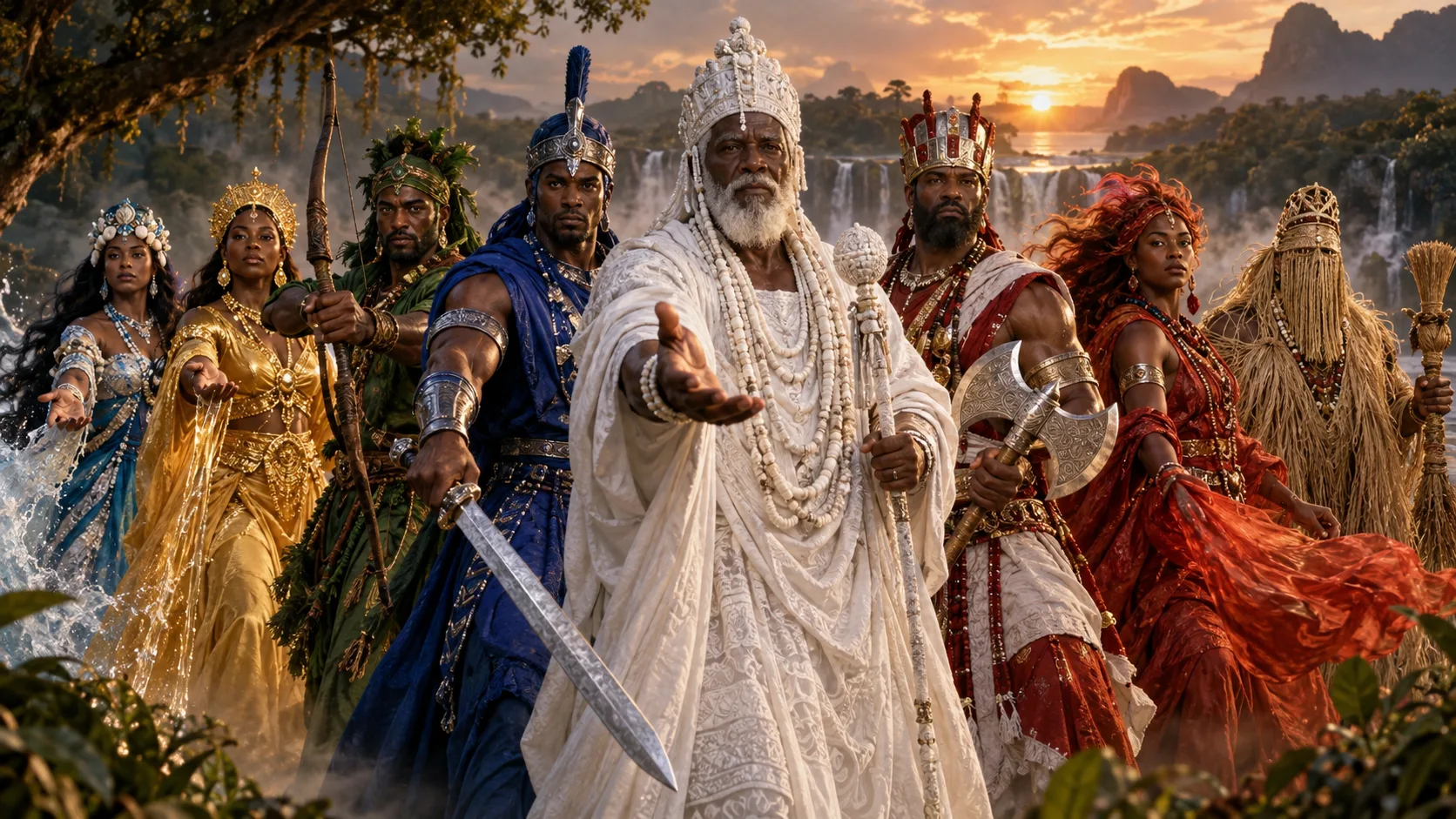
One page for each Orixá, with its own artistic image, references and differences between traditions.
OlodumarêThe supreme creative principle in Yoruba cosmology, which does not receive direct worship like the Orixás.ExuThe Orixá of movement, communication and paths. Must not be confused with the spirits called Exus in Umbanda, or with the OxaláOrixá associated with the creation of humanity and peace, revered as the father of many Orixás.OgumOrixá of iron, technology, agriculture and paths, very present in Brazil.OxóssiOrixá of forests and hunting, connected with abundance, knowledge of the forest and protection.OxumOrixá of fresh waters, beauty, love, fertility and precious metals.OxumarêThe rainbow serpent, joining heaven and earth and associated with transformations and life cycles.OssaimOrixá of medicinal and liturgical plants, guardian of the knowledge of leaves.
Spirits and lines of spiritual work
Caboclos, pretos-velhos, children, Exus, Pombagiras and other lines, with context and sources.
Caboclos and caboclasLine of spiritual work associated with Indigenous ancestry and the forest, with diverse interpretations among houses.Pretos-velhos and pretas-velhasLine of spirits who present themselves as elders of African origin, connected with the memory of slavery and charity.Children (erês)Line of spirits who present themselves as joyful, playful children. The term "erê" has distinct uses in Umbanda and CandoExus of UmbandaLine of working spirits described in the literature as guardians connected with crossroads and the "left" of Umbanda, and whPombagirasFemale spirits connected with crossroads, whose name originates in Kimbundu, with different interpretations among houses.BoiadeirosLine representing workers of rural Brazil, also called caboclos sertanejos or caboclos de couro.Baianos and baianasLine connected with Brazil's Northeast and migration from that region to large cities, especially popular in São Paulo terreiros.MarinheirosLine representing sailors and seafarers, associated with "descarregos", consultations and passes, according to the literature.
Jogo de búzios
Two spaces: knowledge and tradition, and an interactive experience that is only an educational and symbolic simulation, not a religious consultation.
Library, glossary and study paths
Bibliographic references within each page, an integrated glossary and study paths.
Library Glossary Paths Frequently asked questions Editorial policy